
How to Create Better Social Media Video Ads: A Practical Creative Testing Guide
Better social video ads start with a clear message and a set of creative ideas worth testing. Use this guide to plan hooks, formats, variations, and reviews without treating every edit as a new strategy.
/ Table of contents:
Start with one audience problem
A social video ad has limited time to make its point. Begin with the audience, not the effects. What does the viewer want, worry about, or need to understand before considering the product? Choose one useful message for the ad and build the video around it.
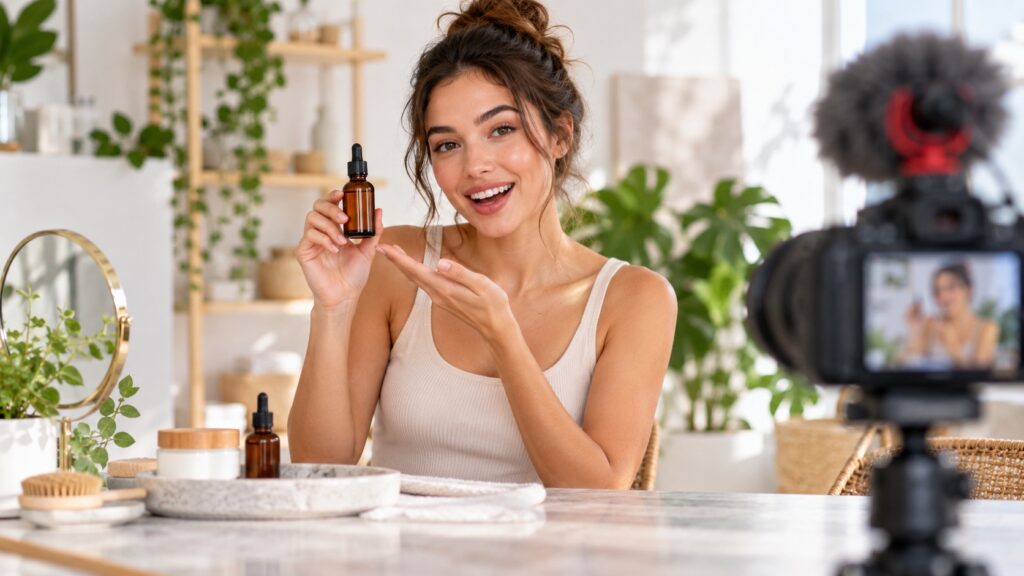
A skincare brand, for example, could focus one ad on a simple routine, another on the texture of a product, and another on a common buying question. Those are different creative angles. Changing only the background colour while repeating the same message is a much narrower test.
Make the opening earn the next few seconds
The opening should quickly signal why the video is relevant. It might show the product in use, introduce a recognizable situation, pose a specific question, or reveal an unusual visual. Avoid a long logo introduction if viewers have not yet been given a reason to care.
A hook is not a promise that the ad will perform. It is a deliberate opening choice you can compare with other choices. Write several hooks for the same core idea, then decide which ones are clear, credible, and appropriate for the brand.
Structure the video around a simple sequence
A useful short-ad structure is: establish the situation, show the product or idea, explain the reason to care, and give the viewer a next step. The sequence can be rearranged, but the message should remain easy to follow. TikTok’s own creative guidance describes a hook, body, and close as a useful structure for its ads; adapt that framework to the format and audience rather than following it mechanically.
Use captions or concise on-screen copy when they help clarify the story. Keep important details legible on mobile and leave enough room for platform interface elements. Produce the video in the aspect ratios required by the campaign instead of assuming one crop will fit every placement.

Test meaningful creative differences
A useful test changes a specific creative variable: the opening hook, the central benefit, the demonstration, the visual style, or the call to action. Keep the audience and offer as steady as practical when you want to understand the creative difference. If several major elements change at once, it becomes harder to explain why results changed.
Make a small testing plan before launch. For each version, write down the hypothesis: “Showing the product in use immediately may make the benefit clearer than opening with a talking-head introduction.” That gives the team something to learn from beyond simply naming a winner.
Read results in context
Views or clicks alone do not explain the full story. Consider the campaign objective and examine the relevant stages of the journey, such as whether people watched, clicked, visited the destination, and completed the intended action. A creative may attract attention but bring poorly matched visitors; another may earn fewer clicks but contribute to more qualified interest.
Use platform reporting alongside your own analytics and sales context. Compare versions under reasonably similar conditions and give tests enough delivery to be informative. Results are signals, not universal rules: what works for one audience, offer, or account may not transfer unchanged to another.

Turn learning into the next round
Keep a record of the idea, opening, format, and outcome for each asset. Look for patterns across several tests rather than overreacting to one result. If demonstrations repeatedly hold attention, explore different demonstrations. If a benefit is understood but does not prompt action, review the offer, landing page, and next step as well as the video.
TikTok’s business resources also recommend using creative insights to inform future concepts, a useful reminder that creative development should be an ongoing loop rather than a one-time deliverable.
Build a creative system for paid social
A practical paid social program needs a steady flow of distinct ideas, disciplined production, and a way to learn from campaign data. SGNTUR creates performance ad creative, including AI-generated and hybrid video concepts and variations for paid campaigns.
Talk with SGNTUR about building your next round of social video ads.
Source note: Platform-specific creative guidance in this article is informed by TikTok for Business resources: Creative Codes, Video Advertising Guide, and Video Insights. Platform recommendations and interfaces can change; verify current placement requirements when producing campaign assets.
